


Routing Recommendation in Progress: Antofagasta, Chile

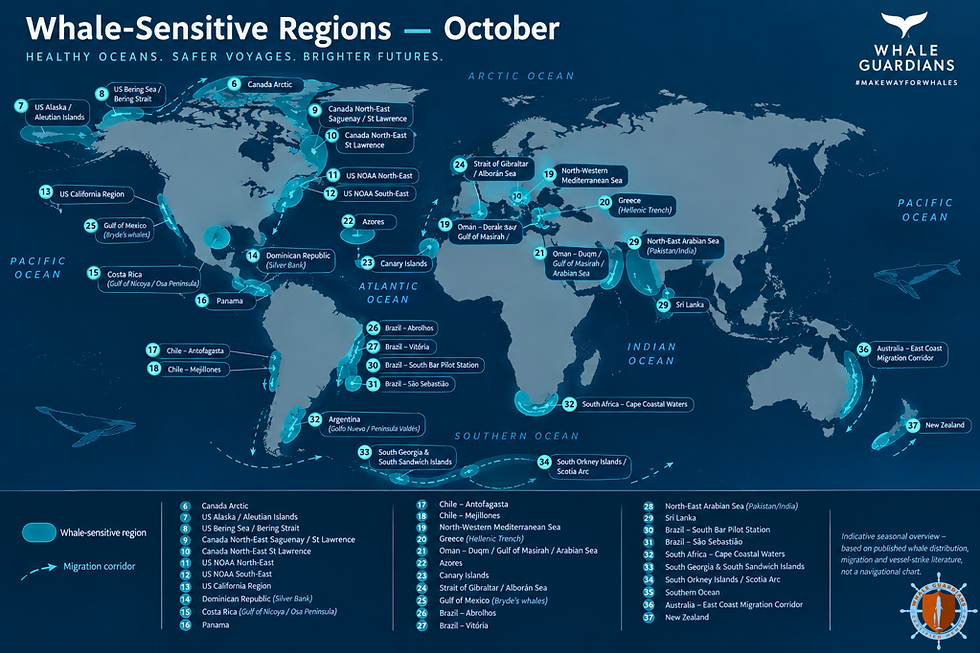
Antofagasta sits within the Atacama desert, the driest non-polar desert of planet earth, and is described as a laid back Chilean city, home to about half a million people. It is one of the planet's major mining hubs, exporting copper, nitrate, iodine, gold, silver, iron ore, lithium, cement and lime, and other refined materials such as steel, from its seven-berth port. Between two to three thousand ships come and go annually from the port, traveling through the habitat of endangered Fin whales, the world's second largest living animal after the blue whale. The Fin whales migrate to the area between October and January to feed on krill and small fish, made plentiful by the cold, nutrient-rich Humboldt current.
This year, there have been twelve documented beached whales in Chile, among them both Fins and Blue whales, some of which are confirmed ship strike victims.
In 2021, Michael Fishbach and Anna Ceggara-Garcia began collaborating to collect data and create protective measures for whales in the Port of Mejillones, Chile, which is about 65 kilometers north of Antofagasta.
After the Mejillones routing document was completed and released in 2022, Anna accepted a professorship at the University of Antofagasta and moved her family the short distance south to that city. She then was better positioned to initiate further whale research near Antofagasta.
Anna already enjoyed the success of creating a safer route for whales in Mejillones with Great Whale Conservancy's Whale Guardians Program, and so moving towards protecting the whales in the Port of Antofagasta was natural. In 2025 and 2026, the GWC supported data collection in the Bay of Antofagasta and around the Angamos Peninsula, conducted by Anna and her team.
This research confirmed a robust presence of endangered Fin whales, both in the bay and near the peninsula, with populations greater in number in 2026 than previously observed.
In late January of 2026, Christian Guerra, owner of Ocean Adventure, a whale watching business in Antofagasta, learned more about the Whale Guardians program and agreed to share any data he collected on his tours, thus adding to the three years worth of data collected by biologists.

As we go to press, the regional governor, the national fisheries representatives, port authorities of Antofagasta, biologist Anna Ceggara-Garcia and tour operator Christian Guerra, have formed a coalition with Whale Guardians to create a routing recommendation to protect the Fin whales from shipping traffic, as the many bulk carriers loaded with copper, iron ore, nitrate or lithium sail along the peninsula, arrive and depart from the Port of Antofagasta.
We are all looking forward to the upcoming Port of Antofagasta routing recommendations, so that this population of great whales can be better protected.

Comments