


Whale Guardians Field Journal - Innovations and Insights from Ocean Innovation Africa
Updated: Apr 3
Innovations and Insights from Ocean Innovation Africa
A few weeks ago, I (Gregory Vogt) attended the Ocean Innovation Africa conference at the Durban International Conference Centre with the intention of networking on behalf of Whale Guardians South Africa.
The event provided an excellent platform to connect with professionals dedicated to ocean conservation and innovation.

Expert Workshops and Focus on Ocean Innovation
On the second day of the conference, five expert workshops were held, all centred on developing innovations to reduce harm to the oceans and support blue economy principles. These sessions showcased emerging technologies and creative approaches to safeguarding marine environments.
Exploring Artificial Intelligence in Ocean Research
I chose to participate in the AI workshop, which was attended predominantly by academics specialising in ocean research, AI professionals, and several government officials. The discussions reaffirmed what I had discovered during the conceptualisation of the POD View Logbook concept: AI becomes truly effective when it is supported by accurate and reliable data.
And that is exactly why we at Whale Guardians have chosen to develop a method of gathering accurate data from our oceans, to implement a strategy to mitigate ship strikes on marine mammals.
We encountered many advanced innovations being explored.
Throughout the process of exploring how we can effectively and efficiently collect marine mammal data, specifically in shipping lanes, I met numerous innovators investigating methods on how to capture such data. Their research projects included testing the concept of utilising sophisticated technologies, including satellite tracking for marine mammal locations and specialised camera systems for identification and imagery. These innovative approaches sought seed capital starting at US $5 million, with one project looking for US $20 million..
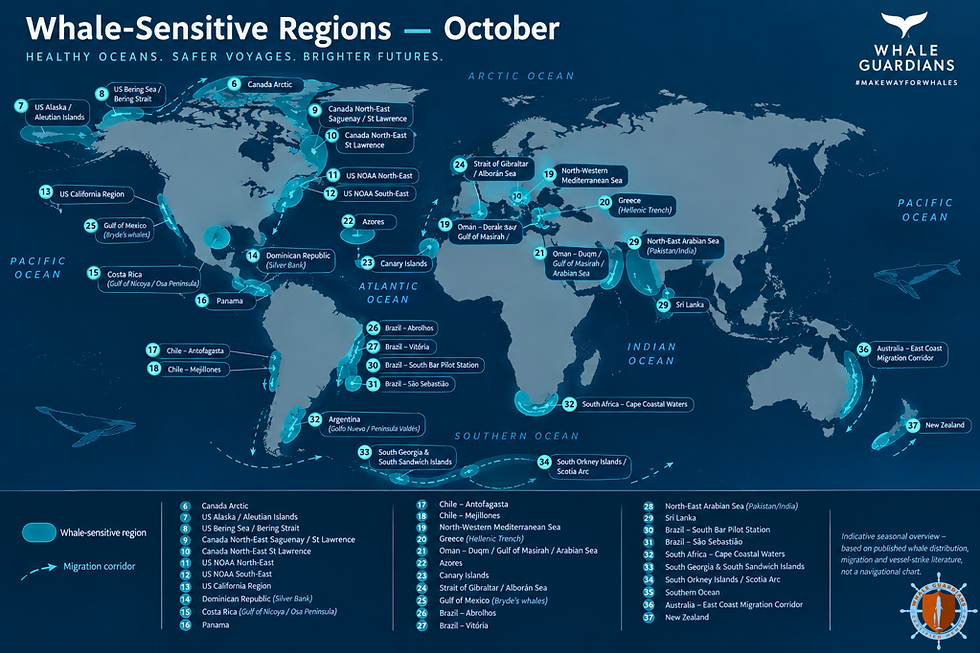
To successfully mitigate ship strikes on marine mammals, we need accurate data that can inform ship captains about which routes are best to take.
Harnessing AI for Research and Data Analysis
Having previously published on ResearchGate with Padova University, accessing research data specific to ship strikes on marine mammals was straightforward. However, organising and analysing these papers presented a challenge - one that AI addressed efficiently. By uploading publications to AI for sorting and analysis, unpacking the content of these papers was streamlined and simplified, reminding me of a notable moment from the AI workshop at Ocean Innovation Africa. An expert presenter introduced the concept of AI hallucination. Indeed, AI can hallucinate, especially when users mistakenly believe it is the ultimate solution to all challenges.
Challenges in Using AI: (Bias, Pirated Data, and Chaff)
The workshop highlighted several caveats when employing AI, including bias in data, pirated data, and chaff - large volumes of low-value information.
In the realm of gathering data to inform ships about high-risk zones for marine mammals, biased data is most frequently encountered. This occurs when data collected for one purpose is repurposed for another, often due to a lack of suitable alternatives.
The Whale Guardians POD View Logbook Innovation
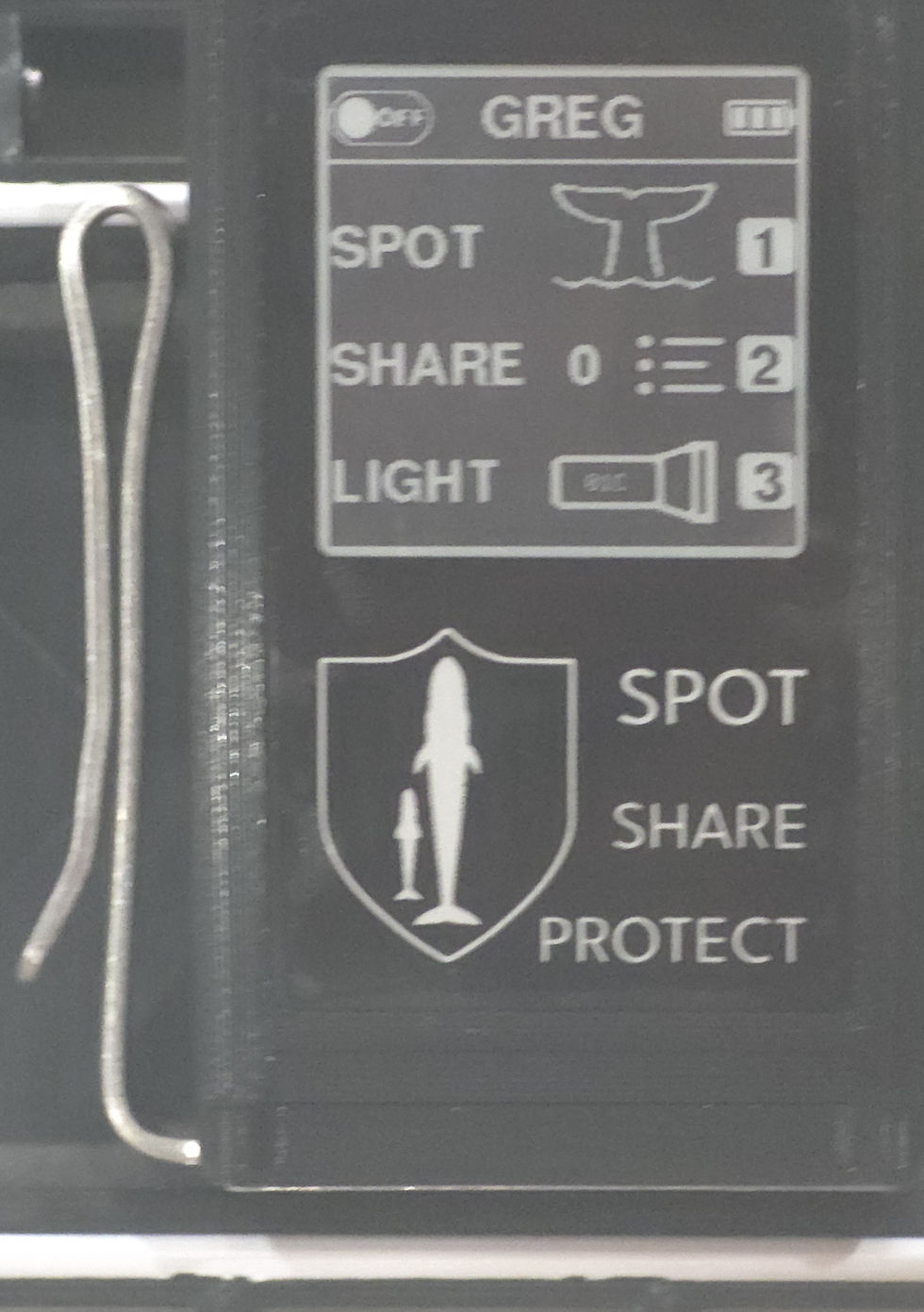
The Whale Guardians POD View Database underpins our mission to collect high-integrity data. The POD View logbook initiative aims to gather marine mammal positions from ships travelling established routes. As we scale the project, our data collection will expand, filling gaps in data availability and populating blind spots.
Building Awareness and Education
This initiative is not a quick fix. It will require time, education, and ongoing communication with those willing to become part of the solution.
Lessons from the SA Coastline
There was a standout lesson from my recent 4,000 km journey along the beautiful South African coast, where I was able to engage with a diverse group of maritime practitioners.
I learned that a large proportion of individuals working in the ocean environment, including those in marine mammal tourism, were unaware that ship strikes pose the greatest threat to our great whales.
They felt disconnected from this reality, believing they had little role to play in resolving the issue, aside from supporting those actively working to make a difference.
Empowering Stakeholders with the POD View logbook Platform
The POD View platform, however, changed this perspective entirely. When a device was placed in their hands, ship strike mitigation for marine mammals became tangible, and they immediately felt empowered to contribute to the solution.

Comments